Tracing Regulatory Influences on Encryption Standards for Mobile Transactions in Swiss Live Dealer Environments
Morgan Walter · Aug 22, 2026

Tracing Regulatory Influences on Encryption Standards for Mobile Transactions in Swiss Live Dealer Environments
Swiss authorities have developed a structured approach to encryption requirements that directly shapes mobile transaction security in live dealer environments, and these rules integrate data protection mandates with financial oversight mechanisms while operators must comply with evolving technical specifications that address both domestic and cross-border data flows. Federal legislation such as the Federal Act on Data Protection sets baseline expectations for cryptographic protocols, and cantonal gaming commissions add layer-specific guidelines that influence how platforms implement TLS versions and key management practices during real-time betting sessions.
Core Regulatory Bodies and Their Mandates
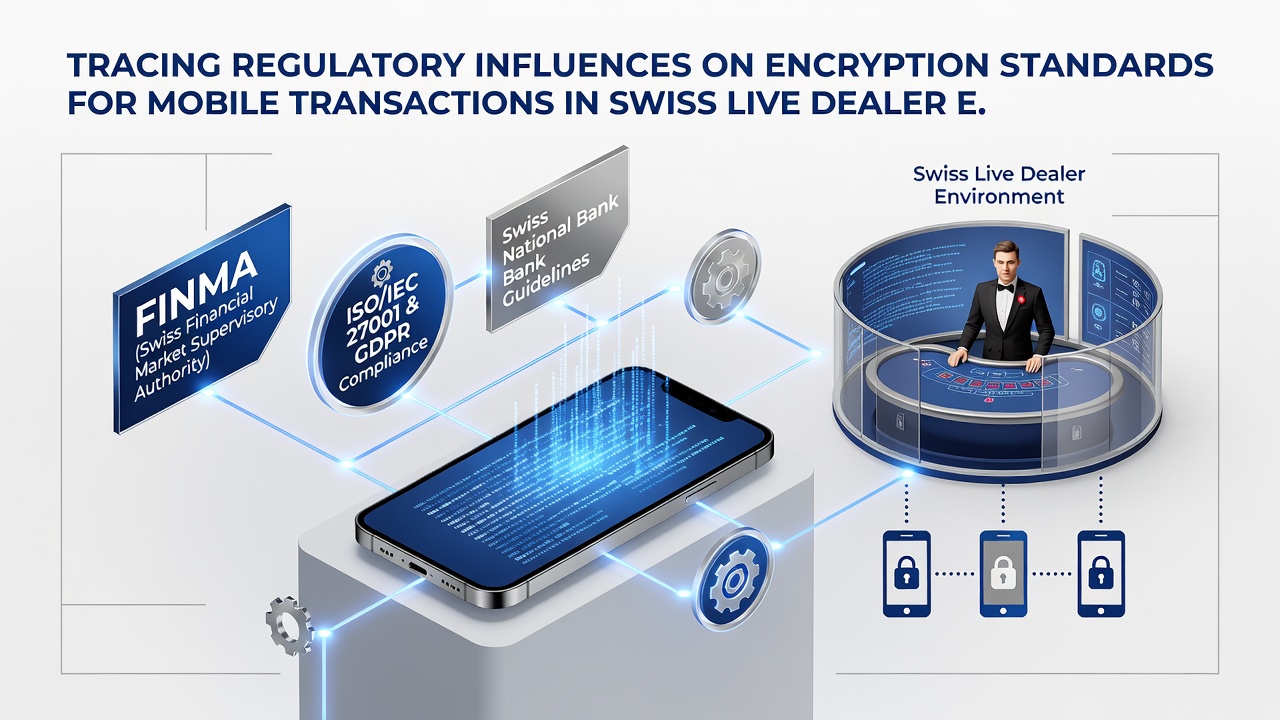
The Federal Data Protection and Information Commissioner oversees compliance with encryption standards that protect user data during mobile interactions, whereas the Swiss Federal Gaming Board coordinates with cantonal entities to ensure live dealer platforms meet security thresholds for financial exchanges. Observers note that these overlapping jurisdictions create a layered system where encryption algorithms must satisfy multiple review processes before deployment, and this structure has prompted providers to adopt AES-256 standards alongside elliptic curve cryptography for session authentication in mobile applications.
Encryption Requirements in Mobile Payment Flows
Mobile transaction protocols in Swiss live dealer settings incorporate end-to-end encryption that aligns with both national data laws and international benchmarks, so platforms route payment details through secure channels that prevent interception during jackpot contributions or table game wagers. Research from the Swiss National Science Foundation indicates that regulatory updates in recent years have accelerated adoption of quantum-resistant algorithms in pilot programs, while operators prepare systems for future mandates expected around August 2026 when enhanced post-quantum standards may become compulsory for all licensed environments.
Payment service providers working with Swiss casinos must demonstrate that their encryption implementations undergo independent audits, and this process verifies resistance to common attack vectors such as man-in-the-middle exploits that target live streaming feeds combined with transaction data. Data from industry reports shows consistent use of certificate pinning and perfect forward secrecy across mobile apps serving Swiss users, yet regional variations in cantonal interpretations sometimes lead to additional testing requirements before new encryption modules receive approval.
International Standards and Swiss Adaptations
Swiss regulators reference frameworks from bodies like the National Institute of Standards and Technology when updating domestic encryption guidelines, and this cross-pollination helps align local practices with global developments in cryptographic strength for financial mobile services. NIST cybersecurity resources provide detailed mappings that Swiss operators consult during system design, while the European Union Agency for Cybersecurity offers complementary guidance that influences how platforms handle cross-border data in live dealer scenarios involving international players.
Live dealer environments present unique challenges because real-time video streams run alongside encrypted transaction channels, so synchronization protocols must maintain both low latency and high security without compromising either element. Experts have documented cases where regulatory audits identified gaps in key rotation schedules, prompting immediate adjustments that strengthened protection for mobile users placing bets during ongoing game rounds.
Developments Anticipated by August 2026
Preparations for regulatory shifts scheduled around August 2026 focus on mandating hybrid encryption models that combine classical and post-quantum techniques, and these changes aim to future-proof mobile transaction systems against emerging computational threats. Platforms serving Swiss live dealer markets have begun testing these configurations in controlled environments, while cantonal authorities review implementation timelines to ensure minimal disruption to player access and game continuity.
Industry associations track how these upcoming requirements intersect with existing data minimization rules, and the resulting compliance strategies often involve updated software development kits that embed stronger default encryption parameters for all mobile endpoints. Figures from recent compliance surveys reveal that over eighty percent of licensed operators have already initiated migration planning, reflecting the structured pace at which Swiss oversight incorporates technological advancements into enforceable standards.
Conclusion
Regulatory influences on encryption standards continue to evolve through coordinated federal and cantonal efforts that prioritize secure mobile transactions in Swiss live dealer environments, and these developments integrate technical specifications with broader data protection objectives. Operators adapt by implementing audited protocols that meet both current mandates and anticipated updates, while international references help maintain alignment with wider cryptographic progress. The framework established through these processes supports consistent security practices across platforms without introducing unnecessary operational constraints.